New Research Exposes Barriers Facing Racialised Creatives Across Scotland
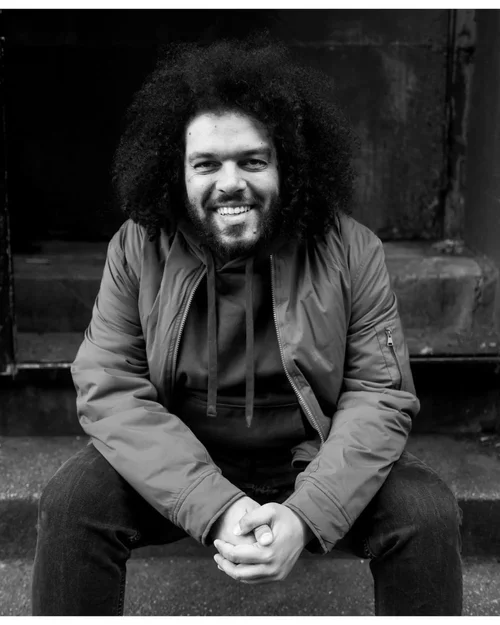
Matt Hickman. Engagement and Advocacy, Creative Balance Scotland
New research finds that racialised creatives across Scotland are experiencing financial insecurity, isolation, tokenistic hiring and barriers to leadership — and argues that these are systemic problems requiring structural change.
A major new report has called for change across Scotland’s creative industries after finding that racialised artists and creative professionals are being held back by the way the sector is structured, funded and led.
Finding The Radiance In Between: Reimagining Scotland’s Creative Spaces, published by Creative Balance, a research and advocacy project run by We Are Here Scotland, examines the wellbeing and experiences of racialised people working across Scotland’s creative sector.
Its central finding challenges the idea that individuals simply need more confidence, experience or opportunities to progress. Instead, the research describes inequalities that are embedded within the structures surrounding creative work.
Financial insecurity emerged strongly throughout the research. Participants spoke about maintaining several jobs simply to remain in the creative sector, often leaving less time and energy for their artistic practice. In one Aberdeen discussion, every participant indicated they would work creatively full-time if it were financially viable.
Questions of power and leadership were equally significant.
Participants described being recruited into administrative positions while managerial roles remained difficult to access. Others reported being approached to represent racialised communities rather than being recognised primarily for their creative skills and professional expertise.
Isolation was another recurring experience, with some participants describing pressure to minimise aspects of themselves in order to fit into creative environments.
Creative Balance researcher and report co-author Loa Pour Mirza said the findings showed that care needs to be embedded in how Scotland’s cultural sector operates, with too many people lacking spaces where they can participate authentically.
But the research does more than identify problems.
Participants called for accessible, community-owned creative spaces where knowledge and skills can be shared rather than gate-kept. They also proposed approaches capable of travelling across Scotland so that creatives outside the central belt are not excluded from opportunities.
Phase 2 will broaden the research to examine race alongside class, rural inequality and accessibility, as well as exploring multilingual approaches to wellbeing terminology and Universal Basic Income.
The findings will be opened to public discussion at the Creative Balance Wellbeing Festival on Sunday 13 September at Civic House, Glasgow, featuring talks, workshops, performances and food, with a keynote from Dr Q Manivannan MSP.
The research was developed with a steering group of racialised creatives and healthcare professionals, with group interviews taking place in Glasgow, Aberdeen and online and involving participants from several parts of Scotland.
Related Articles

Scotland-wide search launched to find the next generation of African music talent
Glasgow 2026 Legacy: Jambo! Radio Turns Commonwealth Games Coverage into a Training…