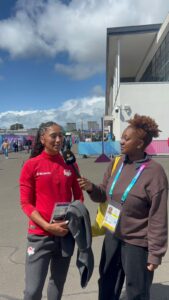
Glasgow 2026: Nigeria Leads Africa as Cameroon Joins Gold Medal Winners at Glasgow 2026
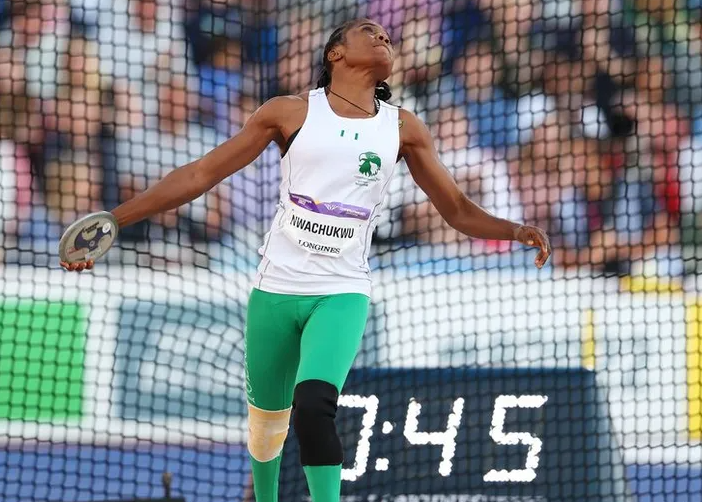
Image from Glasgow 2026.com
African nations continue to make a strong impression at the Glasgow 2026 Commonwealth Games, with Nigeria maintaining its position as the continent’s leading team while Cameroon has celebrated one of the Games’ biggest moments through Emmanuel Eseme’s stunning victory in the men’s 100 metres.
According to the latest official Glasgow 2026 medal standings, Nigeria sits fourth overall with five gold, four silver and one bronze medal (10 total), making it the highest-ranked African nation. South Africa follows in sixth place with three gold, six silver and six bronze medals (15 total), while Kenya is 12th after collecting two gold, two silver and two bronze medals (6 total). Cameroon occupies 16th with one gold medal, Uganda is 18th with two silver and one bronze, while Ghana has also reached the podium with one silver medal.
African and Caribbean Medal Standings
| African & Caribbean Rank | Nation | Gold | Silver | Bronze | Total |
|---|---|---|---|---|---|
| 1 | Nigeria | 5 | 4 | 1 | 10 |
| 2 | South Africa | 3 | 6 | 6 | 15 |
| 3 | Jamaica | 2 | 0 | 0 | 2 |
| 4 | Kenya | 2 | 2 | 2 | 6 |
| 5 | Cameroon | 1 | 0 | 0 | 1 |
| 6 | Uganda | 0 | 2 | 1 | 3 |
| 7 | Ghana | 0 | 1 | 0 | 1 |
Cameroon’s Emmanuel Eseme produced one of the standout performances of the championships, clocking a Games record 9.83 seconds to win the men’s 100 metres and secure his country’s first medal of Glasgow 2026. His victory means five African nations have now won gold medals at these Games—Nigeria, South Africa, Kenya, Cameroon and, from the Caribbean, Jamaica continues to fly the region’s flag with two sprint gold medals.
Nigeria’s success has been built on outstanding performances across para powerlifting, athletics and weightlifting, demonstrating impressive depth across multiple sports rather than relying on a single discipline. South Africa has once again showcased its strength in the swimming pool, where Pieter Coetze has starred with record-breaking swims, while veteran Chad le Clos added another chapter to his remarkable Commonwealth Games career by becoming the most decorated athlete in Games history.
Kenya has reinforced its traditional dominance in distance running, winning both the men’s and women’s 3,000m steeplechase titles through Edmund Serem and Faith Cherotich, while adding medals in weightlifting to underline the country’s growing sporting diversity. Uganda has continued to impress through athletics and para swimming, and Ghana has secured an important breakthrough with its silver medal.
For the Caribbean, Jamaica has once again demonstrated why it remains one of the world’s sprinting powerhouses. Although its medal tally is modest compared with previous editions, both of its gold medals have come on the athletics track, reinforcing the island’s enduring reputation for producing world-class sprinters.
With several athletics finals, boxing, cycling and judo medals still to be decided before the Games conclude, African and Caribbean nations have further opportunities to climb the standings. Nigeria will be aiming to cement its status as Africa’s top-performing nation, while Kenya, South Africa, Cameroon and Jamaica all remain capable of adding to their medal hauls.
Glasgow 2026 is already proving to be another landmark Commonwealth Games for Africa and the Caribbean, with record-breaking performances, historic firsts and growing evidence that the regions are becoming increasingly competitive across a wider range of sports—not just athletics, but swimming, weightlifting and para sport as well.
Related Articles

Scotland-wide search launched to find the next generation of African music talent
New Research Exposes Barriers Facing Racialised Creatives Across Scotland