Youth & Creative Skills
Practical opportunities for young people to learn broadcasting, journalism, podcasting, video production, presenting, interviewing, editing and digital content creation.
Win Cash Daily with your General Knowledge for 10p, 29p or 99p
win cash DailyA Community-Led Charity
Jambo! Radio Scotland exists to advance opportunity, participation and representation through community broadcasting, education, training and creative activity.
Our radio station is more than a broadcasting platform. It provides a practical community space where people can develop skills, gain experience, volunteer, share their stories and participate in conversations that affect their communities.
Through radio, podcasts, video, digital media, training, events and community projects, we help people develop confidence, communication and creative skills while increasing the visibility of voices that remain under-represented in mainstream media and towards a more representative cultural life in Scotland, and inspires our vision of a Scotland committed to anti-racism.
Amplifying Voices. Developing Skills. Creating Opportunities.
Our mission is to empower communities through inclusive broadcasting, education, creative skills development and meaningful participation.
We work to:
Creating Community Impact Through Media
Practical opportunities for young people to learn broadcasting, journalism, podcasting, video production, presenting, interviewing, editing and digital content creation.
Training, mentoring, volunteering and practical experience that help people build confidence, portfolios and transferable skills and progress towards education, training and employment.
Inclusive radio programmes and digital content reflecting the experiences, cultures and priorities of communities that are often under-represented.
Accessible opportunities to develop skills, build networks, participate in community life and have voices and experiences represented.
Community-led broadcasting and information addressing health, mental wellbeing and other issues affecting our audiences.
Broadcasting, events and creative projects that celebrate, document and share African, Caribbean and wider community culture and heritage.
Community-Led. Community-Focused.
Our impact is measured not only by the number of people who listen to Jambo! Radio, but by the opportunities created through our charitable work.
We provide volunteering, training, work experience, community broadcasting and creative opportunities that enable people to develop practical skills, confidence and connections.
Our programmes help participants gain broadcasting and digital media experience, build portfolios, develop communication and teamwork skills and explore pathways into education, volunteering and employment.
We regularly gather feedback from participants, volunteers, listeners and community partners so that people who access our services can influence the programmes and opportunities we develop.
Be Part of Jambo! Radio Scotland
There are many ways to take part in our charitable work.
Give your time and skills to community broadcasting, events and projects across Scotland.
🎧Take part in broadcasting, podcasting and digital media training and build practical work experience.
🎤Bring your idea to air and share the stories, music and conversations that matter to your community.
🤝Work with us on community projects, campaigns, events and funded programmes.
💛Donate to help us keep training, opportunities and community broadcasting free to access.
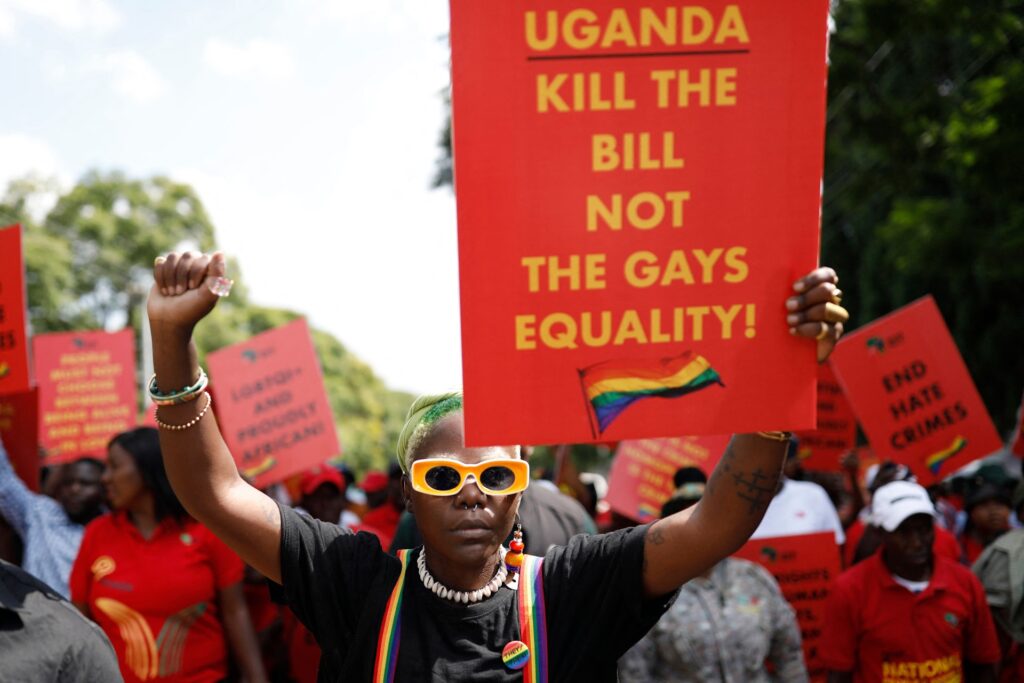
Anti-LGBTQ+ laws are being increasingly employed as a political tactic to divert attention from governance failures in various parts of the world. This trend has raised concerns among activists and scholars who see it as a dangerous strategy that erodes civil rights and freedoms.
Recent developments in Uganda have highlighted this issue. The country’s signing of an anti-gay bill into law, which imposes severe penalties for same-sex relations, has drawn international condemnation. The law includes provisions for life imprisonment for same-sex relations and the death penalty for “aggravated homosexuality,” which includes relations with minors. It also criminalizes the promotion and funding of same-sex activities.
While politicians often present such anti-homosexuality laws as necessary for the protection of values, scholars argue that these laws are better understood as a political tactic to retain power by diverting the public’s attention from governance failures. This tactic is described as a moral panic, a phenomenon where leaders stoke anxieties about certain groups or issues to distract from broader problems.
Anti-LGBTQ+ legislation has been on the rise globally, with political leaders in various countries using it to gain public support. In some instances, leaders have portrayed LGBTQ+ rights as foreign or Western “perversion” that threatens cultural values.
This trend is not limited to Uganda. In Russia, President Vladimir Putin ratified a law against LGBTQ+ propaganda, similar in language to Uganda’s law. Leaders in Nigeria and Brazil have also taken actions against LGBTQ+ rights.
Moral panics, in sociology, refer to surges in social anxieties about deviant groups. They often start as social norms that are inflated into a sense of imminent threat from certain categories of people, such as LGBTQ+ individuals. These moral panics can be manipulated by political leaders to distract from governance failures and gain support by presenting themselves as protectors of cultural values.
In Africa, the history of sexuality and LGBTQ+ rights is complex, with colonial powers imposing their norms and beliefs. The HIV/AIDS era saw the influence of U.S. evangelical missionaries who promoted the idea that HIV/AIDS was caused by homosexual activity, leading to anti-LGBTQ+ sentiments.
Today, anti-LGBTQ+ moral panics serve as a means for leaders to divert attention from systemic problems and abuses of power. In many African countries, political power is linked to access to wealth through state-managed capitalism and foreign trade, creating incentives for leaders to resist democratic changes in leadership.
For example, in Uganda, President Yoweri Museveni has been in power for nearly four decades, leading to frustration among citizens. Leaders like him use anti-LGBTQ+ laws to shift the focus away from broader issues and portray themselves as protectors of children and families, even as they violate civil rights and freedoms.
Activists and citizens are challenging these laws in courts, not only as LGBTQ+ rights issues but also as part of their push for a different political future.
The use of anti-LGBTQ+ laws as a distraction from governance failures remains a concerning global trend, with implications for civil rights, democratic systems, and the well-being of LGBTQ+ communities.